

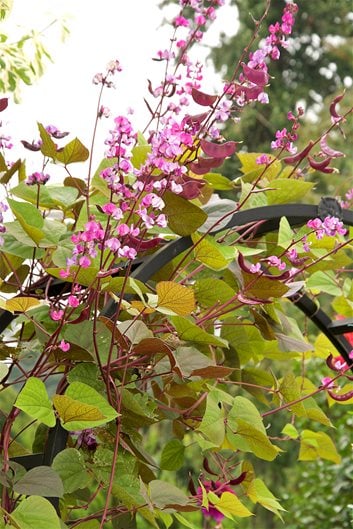
Sümbül Fasulyesi Lablab purpureus

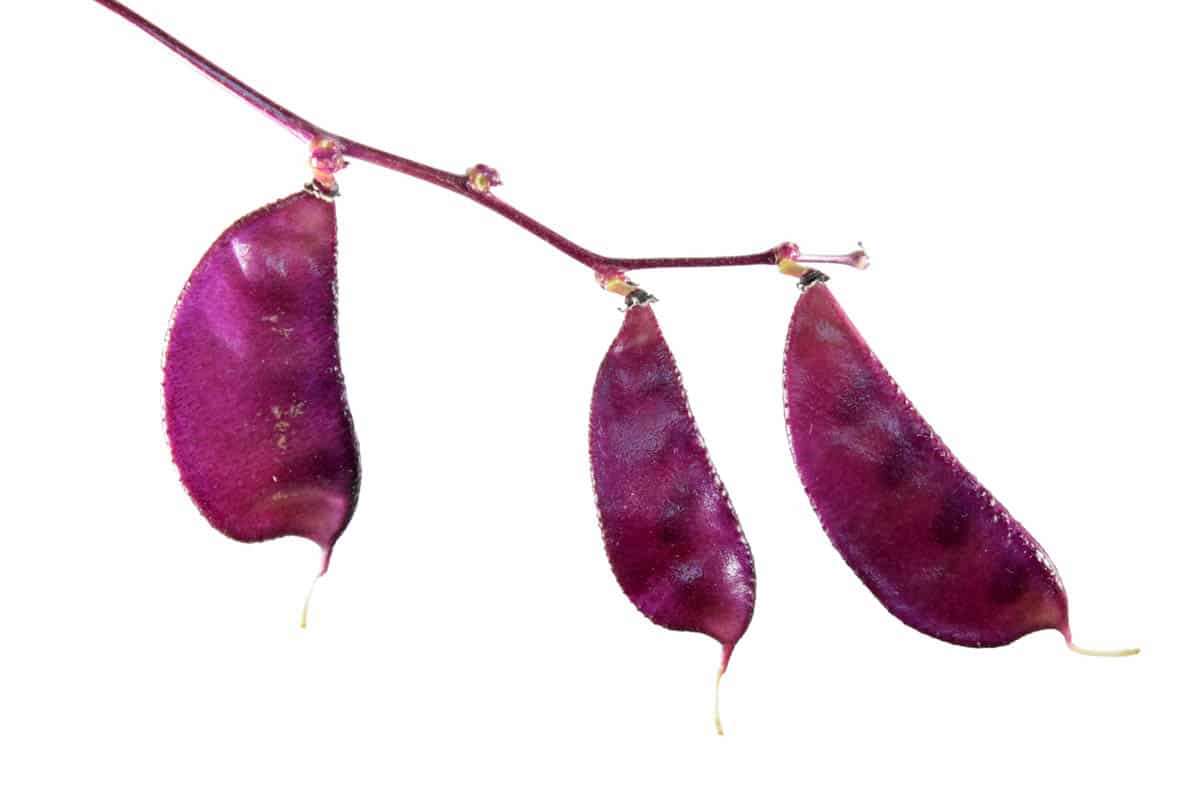
Sümbül fasulyesi, morumsu kalp şeklindeki yaprakları, kırmızı gövdeleri ve bezelye benzeri çiçekleriyle süs bitkisi olarak yetiştirilir. Parlak bordo renkli kabukları ve içindeki fasulyeler yenilebilir. Sinek kuşlarını ve böcek tozlayıcılarını cezbeden hoş kokulu çiçekler, gül moru, pembe veya beyaz tonlarında bulunur. Hızlı büyüyen bu sarmaşığın ağırlığını taşıyacak sağlam bir yapı sağlayın. Perdeleme amaçlı, çardaklarda, çitlerde veya pergolalarda kullanın.
NASTURTIUM
Fotoğraf: Janet Loughrey
NASTURTIUM ( Tropaeloum majus )
Yetiştirme Bölgeleri: Genellikle yıllık olarak yetiştirilir . Güneş Işığı İhtiyacı
: Tam güneş.
Boy/Yayılım: 30 ila 3 metre, 30 ila 90 cm.
Bağlanma Şekli: Sarmaşık yaprak sapı sürgünleri.
Mutfak ve kır evi tarzı bahçelerin vazgeçilmezi olan nasturtium, yuvarlak yaprakları ve sevimli boru şeklindeki çiçekleri için yetiştirilir. Geç ilkbahardan sonbahara kadar açan çiçekler, turuncu, kırmızı, sarı, kayısı, pembe, mor, krem ve desenli iki renkli dahil olmak üzere zengin, mücevher gibi renklerde olabilir. Yapraklar yeşil veya alacalı olabilir. Bu bakımı kolay yıllık bitkiyi mutfak bahçelerinin kenarlarına dikebilir, kaya duvarlarından sarkmasına izin verebilir, asılı bir saksıya dikebilir veya küçük bir kafese tırmandırabilirsiniz. Yaprakları ve çiçekleri yenilebilir.
HAVAI FİŞEK ASMASI
Fotoğraf: Janet Loughrey
HAVAI FİŞEK SARMAŞIĞI ( Ipomoea lobata )
Zones: 9-11, or grown as an annual
Exposure: Full sun
Height/Spread: 10 to 15 feet tall, 1 to 2 feet wide
Method of attachment: Twining stems
This tender perennial is named for the showy flowers that are reminiscent of fireworks. Also known as Spanish flag, the vertical 6-inch stalks of tubular flowers are brilliant orange at the top, graduating to yellow, then creamy white at the bottom for an eye-catching multi-colored effect. The flowers, which bloom continually from mid-summer until frost, are highly attractive to hummingbirds, butterflies, and insect pollinators. Use this quick grower as screening, train up an arbor or trellis, or along a fence.
YALANCI ORTADÖĞÜS SARMAĞI
Flirty Girl™ false hydrangea vine. Photo by: Proven Winners
FALSE HYDRANGEA VINE (Schizophragma hydrangeoides)
Zones: 5-8
Exposure: Partial sun to full shade
Height/Spread: 20 to 50 feet tall, 6 to 10 feet wide
Method of attachment: Aerial rootlets
The flowers of this hydrangea look-alike are similar to those of climbing hydrangea, but bloom later in the season. Delicate flat-topped flower panicles 8 to 10 inches across bloom in mid-summer in shades of white or creamy white. The deciduous foliage turns yellow in fall, with reddish-brown stems and peeling bark offering winter interest. Grow this shade-tolerant woody perennial vine in a woodland setting, training up a mature tree or other structure sturdy enough to hold its weight.
FİNCAN VE TABAK ASMASI
Photo by: Tom Meaker / Shutterstock
CUP & SAUCER VINE (Cobaea scandens)
Zones: 9-11, or grown as an annual
Exposure: Full sun
Height/Spread: 10 to 20 feet tall, 3 to 6 feet wide
Method of attachment: Tendrils
Native to Mexico and South America, this tender perennial is most often grown as an annual. Large showy cup or bell-shaped flowers are framed by saucer-like green petals, hence its common name. Blooming from summer into fall, the honey-scented flowers start out pale green, turning white or purple as they mature. Grow along a fence or on a sturdy trellis or arbor that is strong enough to support its weight.
MOR ÇAN SARMAĞI
Photo by: Janet Loughrey
PURPLE BELL VINE (Rhodochiton atrosanguineus)
Zones: 9-11, or grown as an annual
Exposure: Full sun to partial shade
Height/Spread: 6 to 10 feet tall, 1 to 2 feet wide
Method of attachment: Twining stems
Purple bell vine is a tender perennial grown as an annual. This fast grower produces serrated heart-shaped leaves and exotic bell-shaped purple flowers. Blooms from summer until frost. Grow this smaller vine up a trellis or allow to cascade in a hanging basket. Display on a porch, patio or deck where the dangling flowers can be appreciated up close.
HOW VINES ATTACH THEMSELVES
Understanding how different vines and climbing plants attach themselves will help you pick an appropriate support structure for your climber.
Twining stems: As vines grow they wrap their stems around the supporting structure, such as poles, chain-link fences, trellises, or arbors.
Tendrils or petioles: Thin, flexible leafless stems (tendrils) or the short stems that attach the leaf to the stem (petioles) wrap around narrow supports such as thin poles, stakes, wire, twine, or chain-link fencing.
Aerial roots: Small root-like structures growing out of the sides of the stems attach the plant to rough-textured surfaces such as the textured bark of trees or masonry.
Hold fasts: Disk-like adhesive pads on plants such as Boston ivy or Virginia creeper attach to almost any smooth surface.
(Resource: Vines: Climbers & Twiners: Methods of Attachment, University of Illinois Extension)
*INVASIVE VS. AGGRESSIVE GROWERS
When learning about plants, it's important to understand what it means for a plant to be invasive. From the USDA website: "An invasive species is non-native to the ecosystem under consideration, and whose introduction causes or is likely to cause economic or environmental harm or harm to human health."
Keep in mind that a plant may be invasive in one environment, but okay to grow in another. So, although some of the plants above are noted as being invasive in certain regions, they are fine to grow in others.
It's also important to note that there is a difference between a plant being considered invasive and one that grows aggressively. The Universiy of Illinios Extension Service defines aggressive plants as those that have the ability to "spread fast enough within the garden as to cause issues to other garden areas where the plant is not wanted or is intended to be growing." This is not the same as being identified as being invasive.
Resources for determining if a vine or plant is invasive in your region:
Your local extension service (search online)
Local Master Gardener's Association (search online)
Invasive Plant Atlas
More: Invasive Plants & What to Grow Instead
Featured in: Garden Design's Top 10 Garden Trends for 2022 ("Blurring the Lines Between Indoors & Out")
RELATED:
10 Late-Blooming Flowers
21 Fall Container Ideas
Fall Gardening Tips & Chores
Free Every Thursday
100.000 Bahçe Severin Arasına Katılın
Bitkilerle ilgili bilgiler, bahçecilik çözümleri, tasarım ilhamı ve daha fazlasını haftalık bültenimizde bulabilirsiniz.
Adınız
E-posta Adresi
Posta Kodu
Posta kodu, bitkileri iklim bölgenize göre uyarlamamıza yardımcı olur.
İnsan iseniz, bu alanı boş bırakın.
Hemen Kayıt Olun!
* Zorunlu Alanlar • E-postanızı asla başka taraflara satmayacağız veya dağıtmayacağız.
Bülten hakkında daha fazla bilgi
Bizi takip edin
Canlı Web Seminerleri Bize Ulaşın Hakkımızda Gizlilik Politikası Çerez Politikası Site Haritası Şartlar ve koşullar
Bahçe Tasarımı Dergisi Telif hakkı 2026. Tüm hakları saklıdır. İzin alınmaksızın kısmen veya tamamen çoğaltılması yasaktır.
Jenny Rose Carey ile "Ampullü Bitkilere Dair Temel Kılavuz"un İçeriğine Bir Bakış, 19 Kasım'da Canlı Yayın, Doğu Saatiyle 18:00 / Pasifik Saatiyle 15:00
Kapalı
Sümbül fasulyesi, morumsu kalp şeklindeki yaprakları, kırmızı gövdeleri ve bezelye benzeri çiçekleriyle süs bitkisi olarak yetiştirilir. Parlak bordo renkli kabukları ve içindeki …Daha fazla göster
Sümbül fasulyesi, morumsu kalp şeklindeki yaprakları, kırmızı gövdeleri ve bezelye benzeri çiçekleriyle süs bitkisi olarak yetiştirilir. Parlak bordo renkli kabukları ve içindeki fasulyeler yenilebilir. Sinek kuşlarını ve böcek tozlayıcılarını cezbeden hoş kokulu çiçekler, gül moru, pembe veya beyaz tonlarında bulunur. Hızlı büyüyen bu sarmaşığın ağırlığını taşıyacak sağlam bir yapı sağlayın. Perdeleme amaçlı, çardaklarda, çitlerde veya pergolalarda kullanın.
NASTURTIUM
Fotoğraf: Janet Loughrey
NASTURTIUM ( Tropaeloum majus )
Yetiştirme Bölgeleri: Genellikle yıllık olarak yetiştirilir . Güneş Işığı İhtiyacı
: Tam güneş.
Boy/Yayılım: 30 ila 3 metre, 30 ila 90 cm.
Bağlanma Şekli: Sarmaşık yaprak sapı sürgünleri.
Mutfak ve kır evi tarzı bahçelerin vazgeçilmezi olan nasturtium, yuvarlak yaprakları ve sevimli boru şeklindeki çiçekleri için yetiştirilir. Geç ilkbahardan sonbahara kadar açan çiçekler, turuncu, kırmızı, sarı, kayısı, pembe, mor, krem ve desenli iki renkli dahil olmak üzere zengin, mücevher gibi renklerde olabilir. Yapraklar yeşil veya alacalı olabilir. Bu bakımı kolay yıllık bitkiyi mutfak bahçelerinin kenarlarına dikebilir, kaya duvarlarından sarkmasına izin verebilir, asılı bir saksıya dikebilir veya küçük bir kafese tırmandırabilirsiniz. Yaprakları ve çiçekleri yenilebilir.
HAVAI FİŞEK ASMASI
Fotoğraf: Janet Loughrey
HAVAI FİŞEK SARMAŞIĞI ( Ipomoea lobata )
Zones: 9-11, or grown as an annual
Exposure: Full sun
Height/Spread: 10 to 15 feet tall, 1 to 2 feet wide
Method of attachment: Twining stems
This tender perennial is named for the showy flowers that are reminiscent of fireworks. Also known as Spanish flag, the vertical 6-inch stalks of tubular flowers are brilliant orange at the top, graduating to yellow, then creamy white at the bottom for an eye-catching multi-colored effect. The flowers, which bloom continually from mid-summer until frost, are highly attractive to hummingbirds, butterflies, and insect pollinators. Use this quick grower as screening, train up an arbor or trellis, or along a fence.
YALANCI ORTADÖĞÜS SARMAĞI
Flirty Girl™ false hydrangea vine. Photo by: Proven Winners
FALSE HYDRANGEA VINE (Schizophragma hydrangeoides)
Zones: 5-8
Exposure: Partial sun to full shade
Height/Spread: 20 to 50 feet tall, 6 to 10 feet wide
Method of attachment: Aerial rootlets
The flowers of this hydrangea look-alike are similar to those of climbing hydrangea, but bloom later in the season. Delicate flat-topped flower panicles 8 to 10 inches across bloom in mid-summer in shades of white or creamy white. The deciduous foliage turns yellow in fall, with reddish-brown stems and peeling bark offering winter interest. Grow this shade-tolerant woody perennial vine in a woodland setting, training up a mature tree or other structure sturdy enough to hold its weight.
FİNCAN VE TABAK ASMASI
Photo by: Tom Meaker / Shutterstock
CUP & SAUCER VINE (Cobaea scandens)
Zones: 9-11, or grown as an annual
Exposure: Full sun
Height/Spread: 10 to 20 feet tall, 3 to 6 feet wide
Method of attachment: Tendrils
Native to Mexico and South America, this tender perennial is most often grown as an annual. Large showy cup or bell-shaped flowers are framed by saucer-like green petals, hence its common name. Blooming from summer into fall, the honey-scented flowers start out pale green, turning white or purple as they mature. Grow along a fence or on a sturdy trellis or arbor that is strong enough to support its weight.
MOR ÇAN SARMAĞI
Photo by: Janet Loughrey
PURPLE BELL VINE (Rhodochiton atrosanguineus)
Zones: 9-11, or grown as an annual
Exposure: Full sun to partial shade
Height/Spread: 6 to 10 feet tall, 1 to 2 feet wide
Method of attachment: Twining stems
Purple bell vine is a tender perennial grown as an annual. This fast grower produces serrated heart-shaped leaves and exotic bell-shaped purple flowers. Blooms from summer until frost. Grow this smaller vine up a trellis or allow to cascade in a hanging basket. Display on a porch, patio or deck where the dangling flowers can be appreciated up close.
HOW VINES ATTACH THEMSELVES
Understanding how different vines and climbing plants attach themselves will help you pick an appropriate support structure for your climber.
Twining stems: As vines grow they wrap their stems around the supporting structure, such as poles, chain-link fences, trellises, or arbors.
Tendrils or petioles: Thin, flexible leafless stems (tendrils) or the short stems that attach the leaf to the stem (petioles) wrap around narrow supports such as thin poles, stakes, wire, twine, or chain-link fencing.
Aerial roots: Small root-like structures growing out of the sides of the stems attach the plant to rough-textured surfaces such as the textured bark of trees or masonry.
Hold fasts: Disk-like adhesive pads on plants such as Boston ivy or Virginia creeper attach to almost any smooth surface.
(Resource: Vines: Climbers & Twiners: Methods of Attachment, University of Illinois Extension)
*INVASIVE VS. AGGRESSIVE GROWERS
When learning about plants, it's important to understand what it means for a plant to be invasive. From the USDA website: "An invasive species is non-native to the ecosystem under consideration, and whose introduction causes or is likely to cause economic or environmental harm or harm to human health."
Keep in mind that a plant may be invasive in one environment, but okay to grow in another. So, although some of the plants above are noted as being invasive in certain regions, they are fine to grow in others.
It's also important to note that there is a difference between a plant being considered invasive and one that grows aggressively. The Universiy of Illinios Extension Service defines aggressive plants as those that have the ability to "spread fast enough within the garden as to cause issues to other garden areas where the plant is not wanted or is intended to be growing." This is not the same as being identified as being invasive.
Resources for determining if a vine or plant is invasive in your region:
Your local extension service (search online)
Local Master Gardener's Association (search online)
Invasive Plant Atlas
More: Invasive Plants & What to Grow Instead
Featured in: Garden Design's Top 10 Garden Trends for 2022 ("Blurring the Lines Between Indoors & Out")
RELATED:
10 Late-Blooming Flowers
21 Fall Container Ideas
Fall Gardening Tips & Chores
Free Every Thursday
100.000 Bahçe Severin Arasına Katılın
Bitkilerle ilgili bilgiler, bahçecilik çözümleri, tasarım ilhamı ve daha fazlasını haftalık bültenimizde bulabilirsiniz.
Adınız
E-posta Adresi
Posta Kodu
Posta kodu, bitkileri iklim bölgenize göre uyarlamamıza yardımcı olur.
İnsan iseniz, bu alanı boş bırakın.
Hemen Kayıt Olun!
* Zorunlu Alanlar • E-postanızı asla başka taraflara satmayacağız veya dağıtmayacağız.
Bülten hakkında daha fazla bilgi
Bizi takip edin
Canlı Web Seminerleri Bize Ulaşın Hakkımızda Gizlilik Politikası Çerez Politikası Site Haritası Şartlar ve koşullar
Bahçe Tasarımı Dergisi Telif hakkı 2026. Tüm hakları saklıdır. İzin alınmaksızın kısmen veya tamamen çoğaltılması yasaktır.
Jenny Rose Carey ile "Ampullü Bitkilere Dair Temel Kılavuz"un İçeriğine Bir Bakış, 19 Kasım'da Canlı Yayın, Doğu Saatiyle 18:00 / Pasifik Saatiyle 15:00
Kapalı





0 Yorum